Length-to-width ratio: the same shape can have a different silhouette
Length-to-width ratio compares a diamond’s length with its width. It is calculated by dividing the length by the width.
Length-to-width ratio describes the outline, not the quality. A higher number usually looks more elongated; a lower number looks broader, rounder or squarer. There is no single ratio that is best for everyone.
Why measurements alone are not enough
GIA’s research explains that fancy shapes vary in ways that extend beyond length-to-width ratio. Shoulder shape, wings, point angles, proportions and facet arrangements can all affect the face-up appearance. Table percentage, depth and ratio are useful information, but they cannot determine by themselves whether a fancy-shaped diamond will be attractive.
Cushion: from softly square to distinctly elongated
Cushion diamonds can range from softly square to distinctly elongated. The length-to-width ratio describes this difference in outline, while the cutting style describes the arrangement of the facets within it. Neither outline is automatically better—the right choice is the one you prefer.
An elongated cushion can still have broad antique-inspired facets, a modern brilliant pattern or a modified-brilliant pattern with smaller reflections. Ratio and cutting style are separate choices.
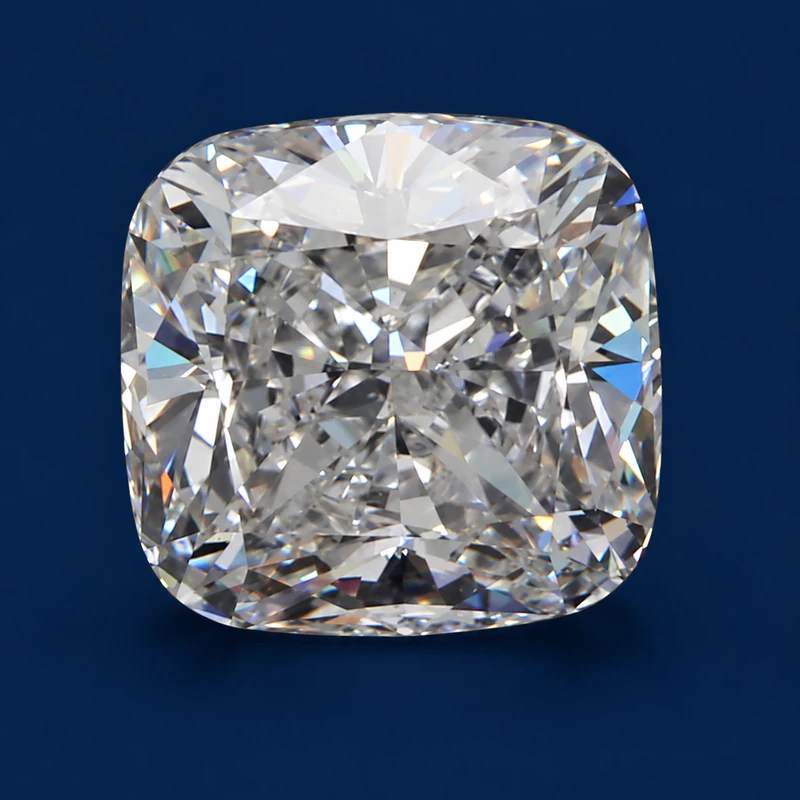 Square cushion · ratio 1.02
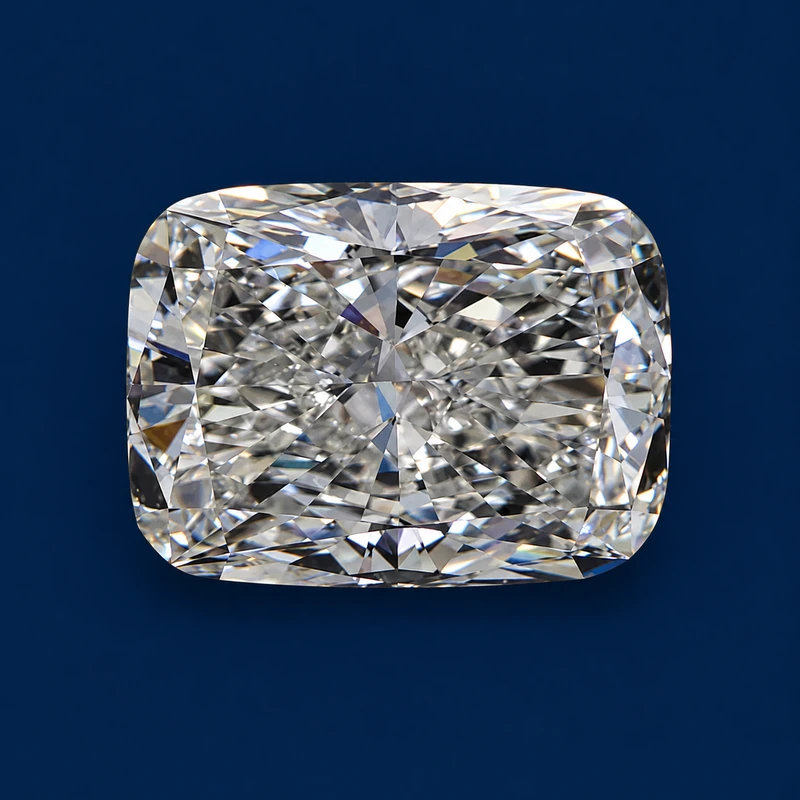 Elongated cushion · ratio 1.34
Oval: broad, classic or elongated
A lower ratio creates a broader oval; a higher ratio creates more length. Ratio alone does not describe the shoulders, the balance of the outline or the strength of a bow tie.
Emerald: broad rectangle or longer silhouette
A broader emerald cut can feel classic and architectural, while a longer emerald can create a streamlined, contemporary presence. Neither is a cut-quality grade. Step pattern, contrast, transparency and weight distribution still need to be assessed.
Radiant, pear, marquise and princess
Radiants may be square or rectangular. Pear and marquise diamonds may feel broad, balanced or slender. Most princess diamonds are square, although rectangular variations exist. In every case, ratio helps describe the silhouette; it cannot tell you whether the finished diamond is beautiful.
Illustrative examples—not shown to scale. Ratio describes outline only; it is not a cut-quality grade.
A note about round brilliants
For a round brilliant, ratio has a different purpose. A round brilliant is intended to appear circular, so its minimum and maximum diameters should be close. Those measurements must still be considered alongside symmetry and the alignment of the facets.
These figures help you compare outlines. They are not GIA cut grades, guarantees of beauty or stock limits.